Madrid has become a cheesecake city. There are bakeries that live off nothing else, annual prizes, queues and lists of the seventeen best. And in the middle of all that noise, the question almost nobody answers properly is the simplest one: what separates a good cheesecake from a merely correct one.

We are writing this from a Cantabrian kitchen, which is a useful vantage point: in Cantabria cheesecake is not a trend of the last decade, it is a household dessert.
Three different things with the same name
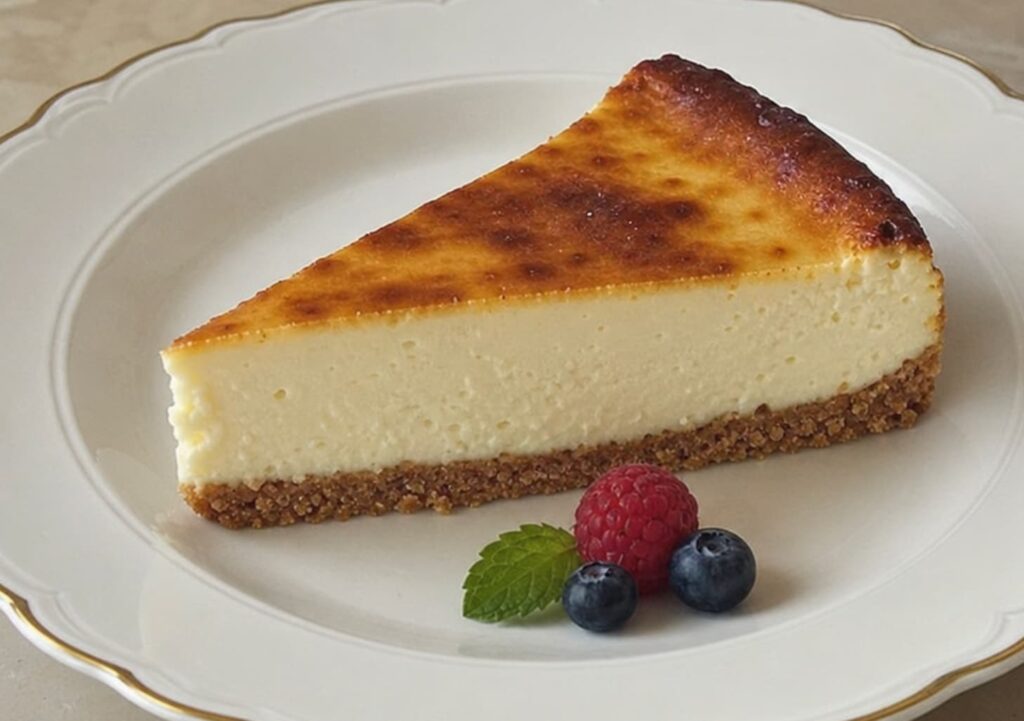
- The baked, creamy one, the famous style: dark, almost burnt on the outside, barely holding together inside. Little or no biscuit base.
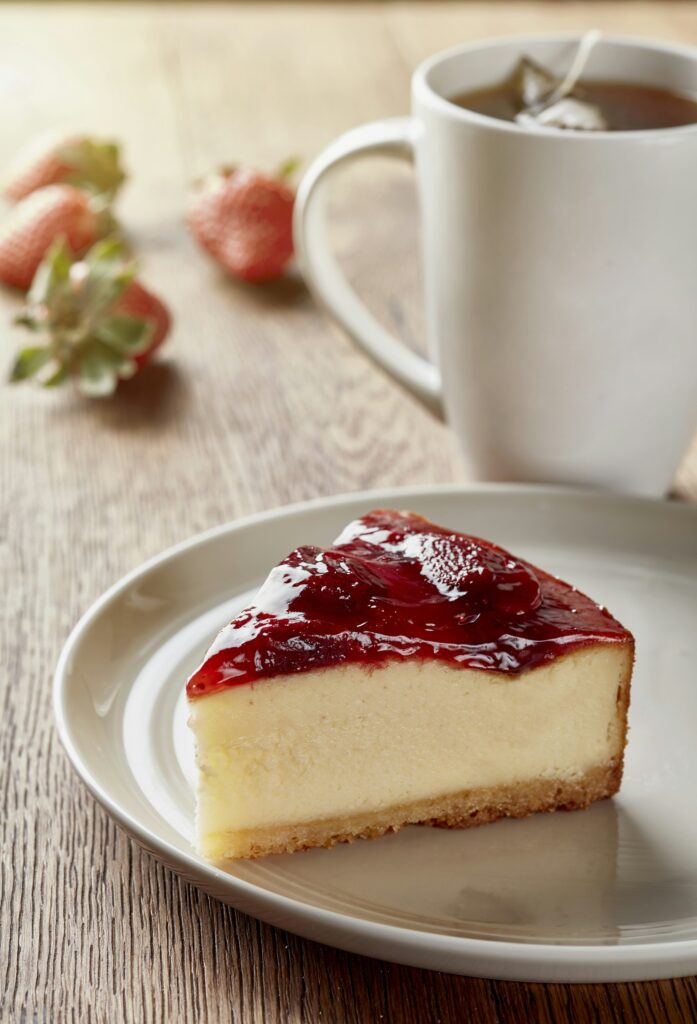
- The classic biscuit-base one, firmer and sweeter, which is what most people picture when they say cheesecake.
- Quesada pasiega, the Cantabrian version: denser, far less sweet, with lemon and cinnamon, made with curdled milk instead of cream cheese. Not a worse cheesecake: a different dessert.
How to judge one before you taste it
- The cut. A good baked cheesecake gives under the spoon and springs back a little. If the slice stands up like a brick, there is too much thickener in it.
- The colour. The browning should be uneven, darker at the edges. An even golden finish usually means a low oven for a long time, and that dries it out.
- The smell. It should smell of dairy and of the oven, not of vanilla. Vanilla is often covering for mediocre cheese.
- The temperature it arrives at. Straight from the fridge it tastes of nothing. A kitchen that cares takes it out a few minutes ahead.
Takeaway or sitting down
This is the decision that changes the result most, and hardly anyone thinks about it. Creamy cheesecake travels badly: it compacts in the box and loses the texture you ordered it for. Madrid’s specialist bakeries are excellent, but what they are solving is the takeaway problem.
If you want it at its best, order it as dessert somewhere that makes it in house, after a meal. It is an end-of-table dessert, not a lunchbox one.
Why Madrid’s best cheesecake usually comes from the north
It is no accident that so many of the city’s celebrated cheesecakes come out of Cantabrian, Basque or Asturian kitchens. In the north the foundation is dairy: pasture-fed cow’s milk, curds, fresh cheeses. Cheesecake did not arrive there as a pastry trend but as a way of using up milk.
That explains two things: they are less sweet than a Madrid palate expects, and texture outranks decoration. No well-made Cantabrian cheesecake needs fruit on top.
Ours
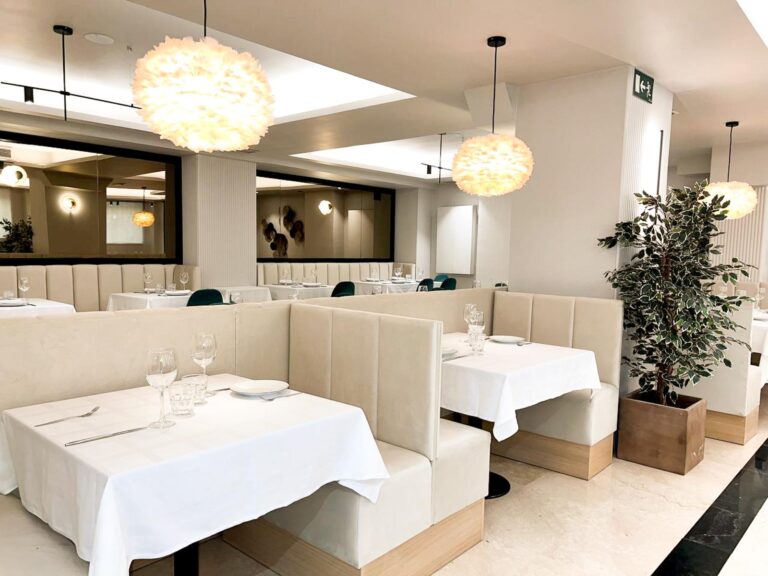
At La Reinosa the cheesecake is made in house and it is, by some distance, the dish people come back for. We serve it as dessert, cut to order and not straight out of the fridge. It closes a working lunch as well as it closes a long dinner.
It is on the menu and also as the dessert on our set lunch, Monday to Friday.
Frequently asked
How is cheesecake different from quesada pasiega?
Quesada is made with curdled milk rather than cream cheese, carries lemon and cinnamon and is considerably less sweet. The texture is dense and slightly grainy rather than creamy.
Why do some cheesecakes come out dry?
Almost always too long in too cool an oven. The creamy style is baked short and hot, and comes out while the centre still moves; it sets as it cools. If it leaves the oven firm, it is already overdone.
Where we are
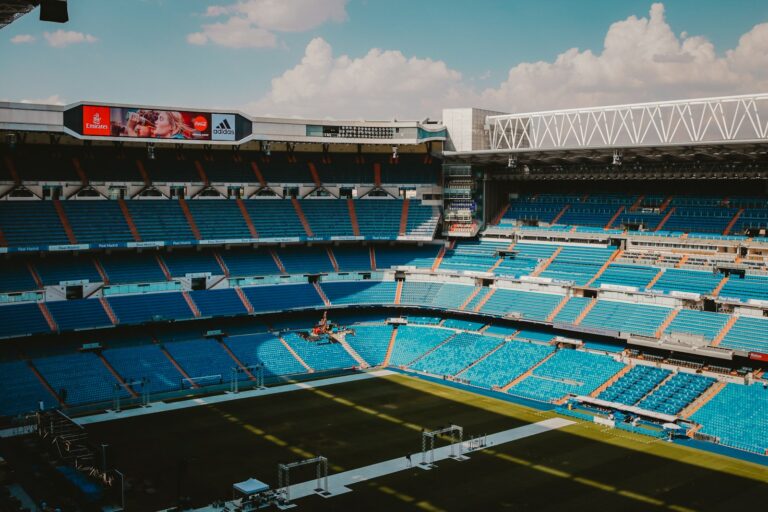
Avenida General Perón 13, 28020 Madrid, in Azca and a five-minute walk from the Bernabéu. Metro Santiago Bernabéu (L10) and Nuevos Ministerios (L6, L8, L10). Book a table or call +34 916 671 967.